
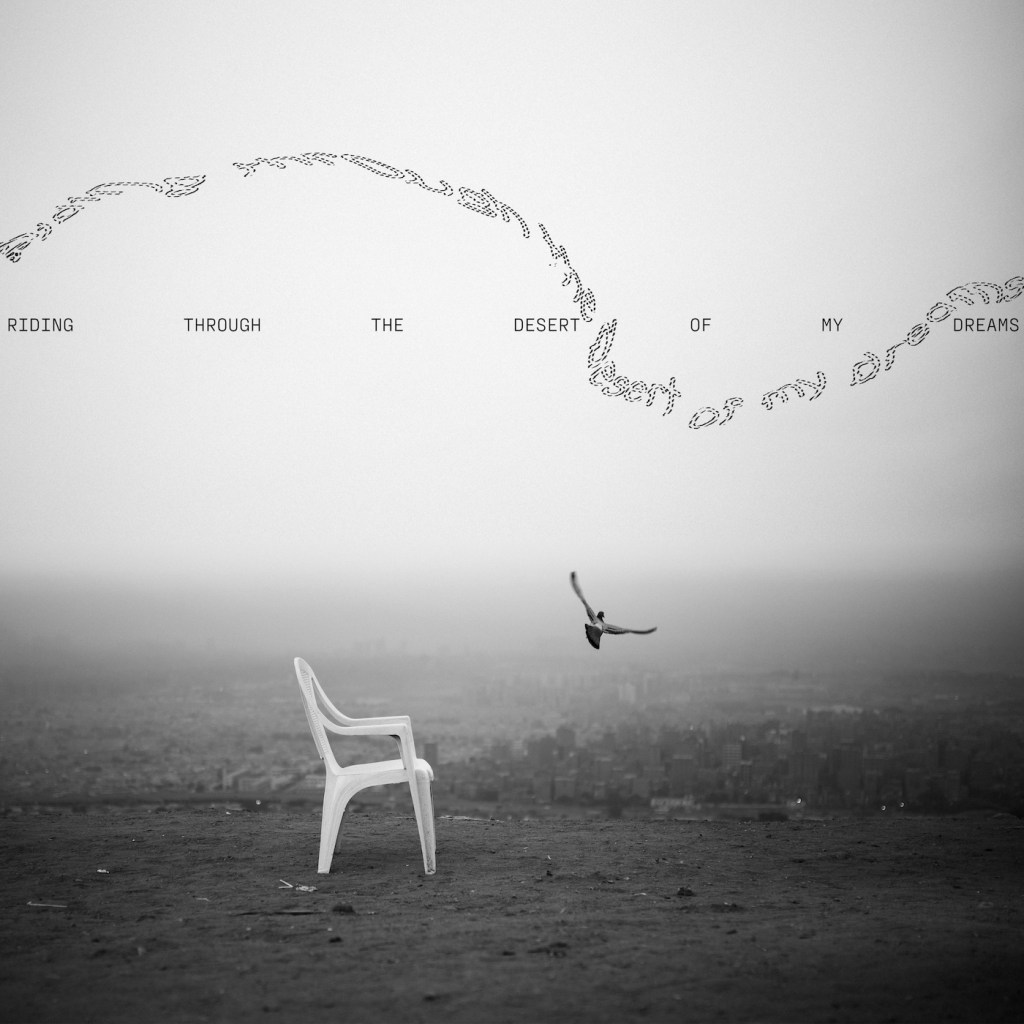
Across four carefully woven tracks, Joshua Scarratt makes a striking entrance with his debut EP Riding through the desert of my dreams. It’s a record born not of hype or trend, but of self-examination and artistic rediscovery. With its mix of raw confession, cinematic textures, and poetic clarity, it positions Scarratt not as someone searching for a sound, but someone who’s already found it.
Opener ‘Can’t Get You Out of My Mind’ drops you into a storm of unchecked thoughts and emotional detangling. It’s a love song on the surface, sure, but scratch beneath that and you find something far more layered. Obsessive thinking, performance culture, low-level social media addiction, and the haunting pull of unfiltered desire all circle here. Vocally and sonically, it’s slightly off-kilter in the best way, Scarratt walks the line between dreamlike nostalgia and psychological tension, channeling something faintly Bowie-esque in its theatrical introspection.
Speaking about the track, Scarratt described it as “an infatuation during a journey of self-discovery,” highlighting the disconnect between digital performance and emotional reality. There’s no dramatic villain in the narrative, only a realisation that the mind, left unobserved, will build its own stories from scraps of online clues and internal projections. The song is equal parts haunting and liberating, and marks a mature beginning to a debut project.
Track two, ‘Summer of ’21’, doesn’t seek to soothe, it tightens the lens. The arrangement is woozy and noirish, calling to mind The Last Shadow Puppets in their slower, brooding moments. There’s space here, to think, to ache, to reckon. But despite the title’s suggestion of nostalgia, Scarratt is clear: this isn’t a longing for the past. It’s a rejection of it. “It is me signing off to narratives I have held onto for far too long,” he said. The result is a song that refuses the easy route of rose-tinted memory and instead offers something far more valuable, honest closure.
The third track, ‘Hide Away’, draws things even closer to the chest. Its bluesy, smokey vibe evokes the kind of song you’d expect to hear in the early hours of a slow-burning night, all velvet darkness, muted regret, and hushed arrangements. There’s real restraint at play here; the track simmers but never spills, choosing atmosphere over melodrama. And it works. It’s a moment of pause and reflection in a record full of self-inquiry.
Then comes ‘Hold Me’, the most complete and musically expansive track of the four. Originally written in 2014 but revisited and recontextualised nearly a decade later, it’s a multi-layered piece that weaves together past and present with elegance. It’s packed with detail: guitar solos, shifting tempos, tempo drops, and sonic flourishes that never feel showy. There’s a real weight to its message, the tension between public performance and private pain, and Scarratt doesn’t hold back. “It’s a cry for help and the endurance of repetition,” he notes, with even the repeated lyrics serving a purpose: to mirror the cyclical traps the mind can fall into.
This isn’t just strong songwriting, it’s lived experience, transformed into art with care.
The EP is Scarratt’s first official release after years spent promoting other artists. That shift, from facilitator to creator, is felt throughout. There’s nothing performative here. Every line is written with intent, every instrumental touch placed with clarity. His return to music was sparked by a major personal reset: choosing sobriety, reconnecting with his guitar, and rebuilding his relationship with creativity after a period of intense mental health struggle post-pandemic. These tracks don’t just explore that journey, they are the journey.
Much credit must go to the production too, co-crafted with longtime collaborator Nick Hinman (Fast Money Music), which allows the songs to breathe. Contributions from musicians like Gamaliel Rendle Traynor (Fat Dog, Crack Cloud, Fat White Family) and Callum Brown (Ulrika Spacek) add texture and depth without ever overshadowing the emotional core. Still, these songs belong resolutely to Scarratt, they’re guided by his voice, shaped by his questions, and finished with a painter’s attention to detail.
There’s no pretence to this release. Riding through the desert of my dreams doesn’t chase trends or drown itself in overproduction. It opts instead for clarity, both in message and music. The themes are universal (isolation, self-worth, connection, clarity) but never feel generic. And while Scarratt has spoken openly about his journey with sobriety, this isn’t a redemption narrative, it’s more grounded, more nuanced. It’s the sound of someone finally listening to themselves, and choosing to stay.
For a debut, it’s remarkably complete. For a listener, it’s quietly unforgettable.
 THE FRONT ROW
Leave a comment