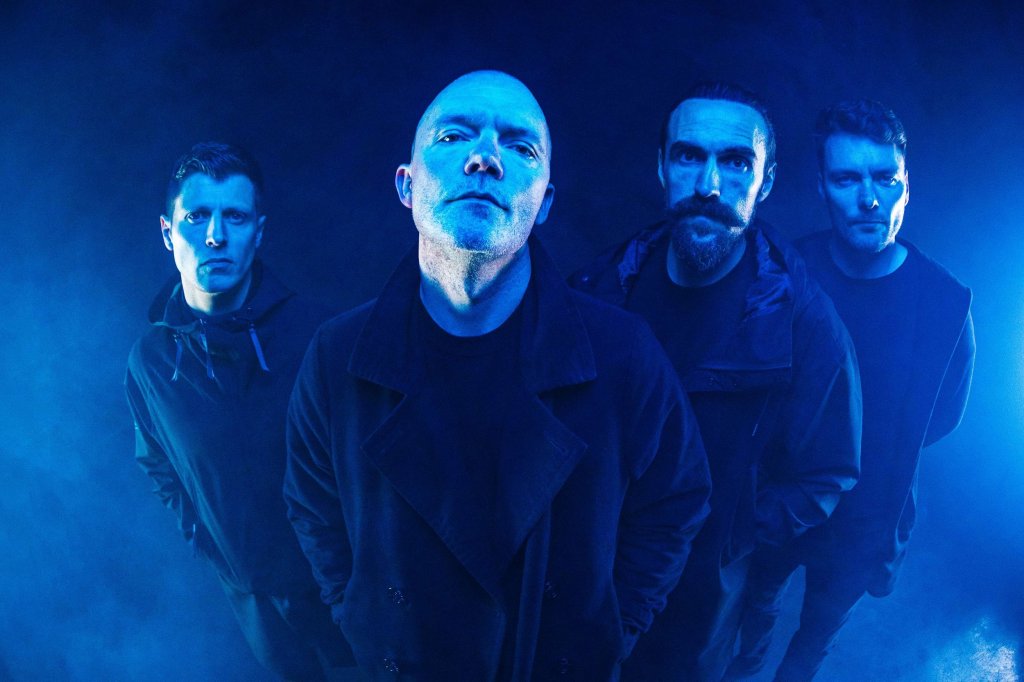
The Slow Readers Club’s new album, Out of a Dream, is a kaleidoscopic journey through introspective and atmospheric soundscapes. Scheduled for release on Friday, March 14, 2025, the record represents a significant evolution in the band’s sonic and thematic identity, blending deeply personal reflections with societal commentary. We went deep in conversation with the band to discover all you need to know about the record.
Out of a Dream continues your journey into introspective and atmospheric soundscapes. What was the central creative vision or story you wanted to convey with this record? How does it connect to or diverge from your previous works?
Each song tells its own story really, we don’t set out with a set theme or musical treatment for a record. That said, there are common threads. Most of the songs are about longing for connection in an increasingly bewildering and frightening world. Musically we have continued to push into different territory while remaining true to what’s at our core: memorable melodies, meaningful lyrics set against a musical backdrop that’s full of atmosphere and drama.
Your lyrics often explore themes of isolation, connection, and existential reflection. Can you share how these themes evolved or shifted on Out of a Dream? Were there specific moments or inspirations in your lives that shaped the album’s narrative?
Some songs deal with big themes like our relationship with technology and social media and the impact it has on society, politics, social structures, and our emotional health. Others are more intimate and personal and deal with romantic relationships and friendships. I’d been watching a lot of Adam Curtis documentaries and Charlie Booker’s ‘Black Mirror’. Those both really resonated with me, I’d say they probably had an influence on a fair amount of the lyrical content.
Technofear – the track that gives the album its name is a comment on social media and the fact that as our lives are increasingly lived online. e are exposed to multiple versions of reality. I’m interested in the impact all of that has on our sense of a shared truth, interpersonal relationships and our inner lives.
Little White Lies – is a track that’s more intimate and melancholic. Melodically it ebbs and flows organically and it’s interesting structurally and dynamically. There’s some imagery in the lyrics that I’m really fond of:
“Time to confess all those little white lies she said. All the promises broken, stuck in the sand plain to see like shells across the beach at low tide”
Boy So Blue – is a big electronic dance track of a tune, we’ve gone further here into a full-on dance than we ever have before. I find it really exciting, it’s big and poppy but the lyrics are meaningful and very personal.
Over the years, your sound has balanced post-punk influences with electronic flourishes. How has Out of a Dream expanded or refined your sonic identity? Were there any risks or experiments in production that stand out to you?
I’d describe this record as kaleidoscopic. It has everything from lo-fi organic sounding ballads to big euphoric electro, on both ends of the spectrum we’ve pushed ourselves further than we’ve gone before. There are often moments from track to track where we each won’t be super comfortable, but that’s the nature of things when writing and performing together and working with a producer. Everyone brings their own perspective.
How did the writing and recording process for Out of a Dream compare to your previous albums? Did you approach it with a fresh methodology, or was it rooted in the collaborative practices you’ve honed over the years?
In truth it has always been a balance of some ideas being born from jamming sessions and some are born of home demos, where Kurt has written a guitar idea and shared it on WhatsApp or I’ve written something on piano or synth. Each of us writes our own parts for the tune. Some tunes are more difficult than others which can come down to personal taste or how invested people feel.
As a band that has grown together over multiple albums, how do you keep your collaboration dynamic? Were there any moments during the making of Out of a Dream that challenged or deepened your synergy as a band?
I think lockdown and working remotely opened up new approaches for us and allowed us to take things further in home demo form. That approach, combined with jamming stuff through in the room, has maybe given us more opportunity to consider the finer details around arrangement and dynamics. We tend to record every practice, which allows us to go home and live with stuff, iterate on it and bring new ideas in.
Your music resonates deeply with a loyal fanbase. Were there specific emotions or messages you hoped listeners would take away from Out of a Dream? How do you balance staying true to your artistic instincts while responding to audience expectations?
I hope people relate to it first and foremost. I feel like as a world at the moment we are finding our way through the dark. It’s about trying to find comfort in love and human connection amid a dizzying swirl of propaganda, culture war and conflict. And as much as we deal with dark themes, as always, I think our music can be life affirming and uplifting. It can make people cry and it can make people dance. I think there’s probably a good balance on the record of trying to stay true to ourselves musically and thematically while at the same time not rehashing old ideas and trying to push into new territory.
Many of your tracks are known for their powerful live renditions. How do you anticipate translating the songs from Out of a Dream to a live setting, and are there particular tracks you’re especially excited to perform?
I’m really excited to play ‘Boy So Blue’ and ‘Little White Lies’ on the tour as they are great representations of the opposite ends of the spectrum I’ve been talking about.
With Out of a Dream marking another milestone in your career, what excites you most about the future of The Slow Readers Club? Are there unexplored territories—musically, thematically, or geographically—that you’re eager to venture into?
I’m excited to see how the album is received in the world and which tracks in particular resonate most. Once the dust has settled, we will decide where we go next musically and thematically, that said we are already working on stuff. Geographically, we’d love to get out to more of Europe and the ‘States.
How did the writing and recording process for Out of a Dream compare to your previous albums? Did you approach it with a fresh methodology, or was it rooted in the collaborative practices you’ve honed over the years?
In truth it has always been a balance of some ideas being born from jamming sessions and some are born of home demos, where Kurt has written a guitar idea and shared it on WhatsApp or I’ve written something on piano or synth. Each of us writes our own parts for the tune. Some tunes are more difficult than others which can come down to personal taste or how invested people feel.
As a band that has grown together over multiple albums, how do you keep your collaboration dynamic? Were there any moments during the making of Out of a Dream that challenged or deepened your synergy as a band?
I think lockdown and working remotely opened up new approaches for us and allowed us to take things further in home demo form. That approach, combined with jamming stuff through in the room, has maybe given us more opportunity to consider the finer details around arrangement and dynamics. We tend to record every practice, which allows us to go home and live with stuff, iterate on it and bring new ideas in.
The Slow Readers Club’s new album, Out Of A Dream, is released on Fri 14 March 2025.

 THE FRONT ROW
Leave a comment