
Such was the show of support for Joe Astley at The Cavern that it seemed like Liverpool’s famous Mathew Street had turned into Wigan’s King Street. The good townsfolk of Wigan had travelled en masse down the East Lancs Road to attend the launch event for Astley’s debut album Twenty-First Century Times. The fact that Astley had chosen two support bands from his home town only served to add to the sense of translocation, and emphasize the quality and depth of the Wigan music scene.
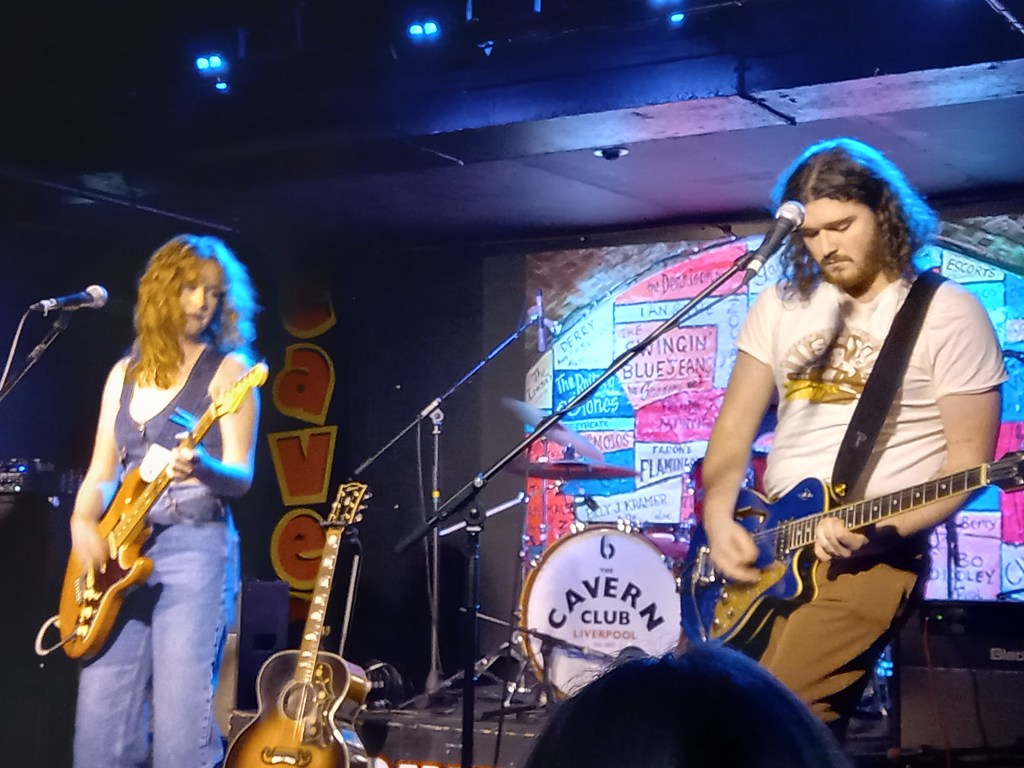
First up were indie four-piece The Facades whose sound is structured around the twin pillars of Alannah Webb’s yearning, luxuriant vocals and Evan Armstrong’s powerful lead guitar. The band’s set took us through their back catalogue starting with their melodramatic debut single That Letter, via way of the anthemic Better, and concluding with their latest release, the shimmering, imploring Beautiful.
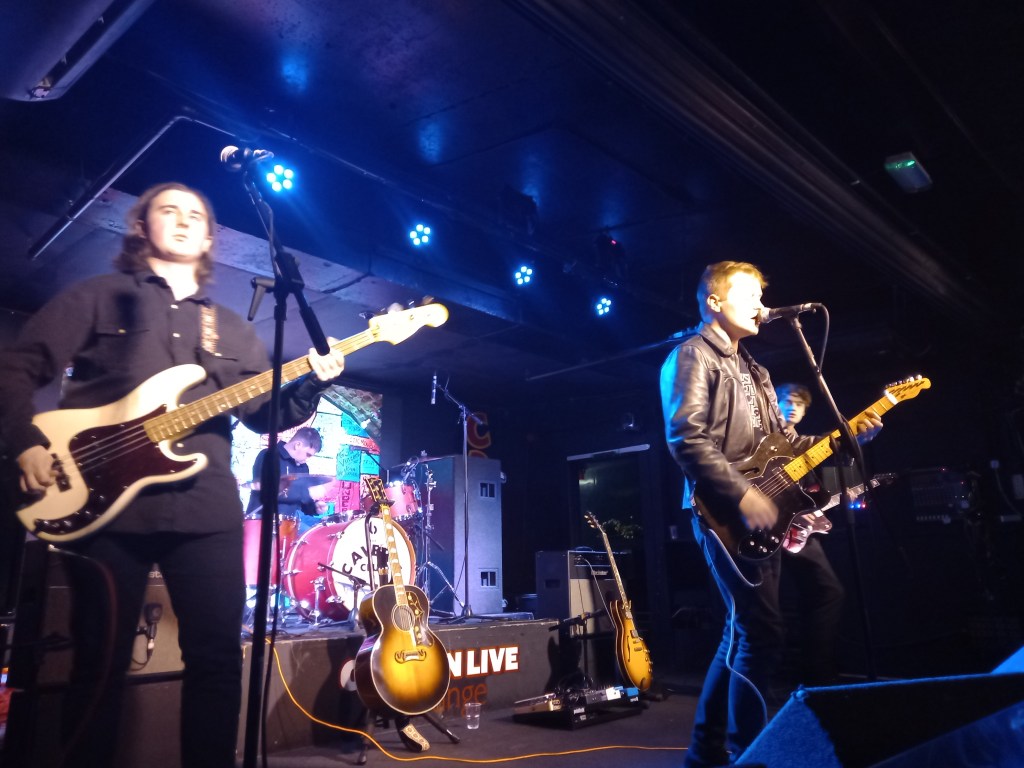
Highlighting the variety of talent coming out of south-west Lancashire were Flechettes. Songs like The Chemical Decade and Caffeine showed that this Wigan four piece appear to inhabit the slightly edgier fringes of the indie-guitar scene.
Singer Jack Heaton’s vocals and guitarist Johnny Raper combine to take Flechettes down a very definite Alt-rock route, and when bassist Will Watts takes over vocal duties for one song the band head off in the dark and grungy direction of Pixies or Radiohead.
The Cavern to Joe Astley is what Der Kaiser Keller was to The Beatles. They are the places where they cut their teeth and polished their craft. Astley had commanded a residency in the bar for some time and as such had built-up a following among the venue’s regular customers. It was the obvious choice from which to launch his debut album – Twenty-First Century Times.
As Astley and his band enter the stage to the sounds of Credence Clearwater Revival’s Bad Moon Rising you can see why he appeals to certain elements of The Cavern’s regular clientele. With his sharp 50’s styled suit and slicked back hair Astley has the look of a Billy Fury. But that’s where the 50’s references end. Musically, Astley and his band are anchored further forward in time.
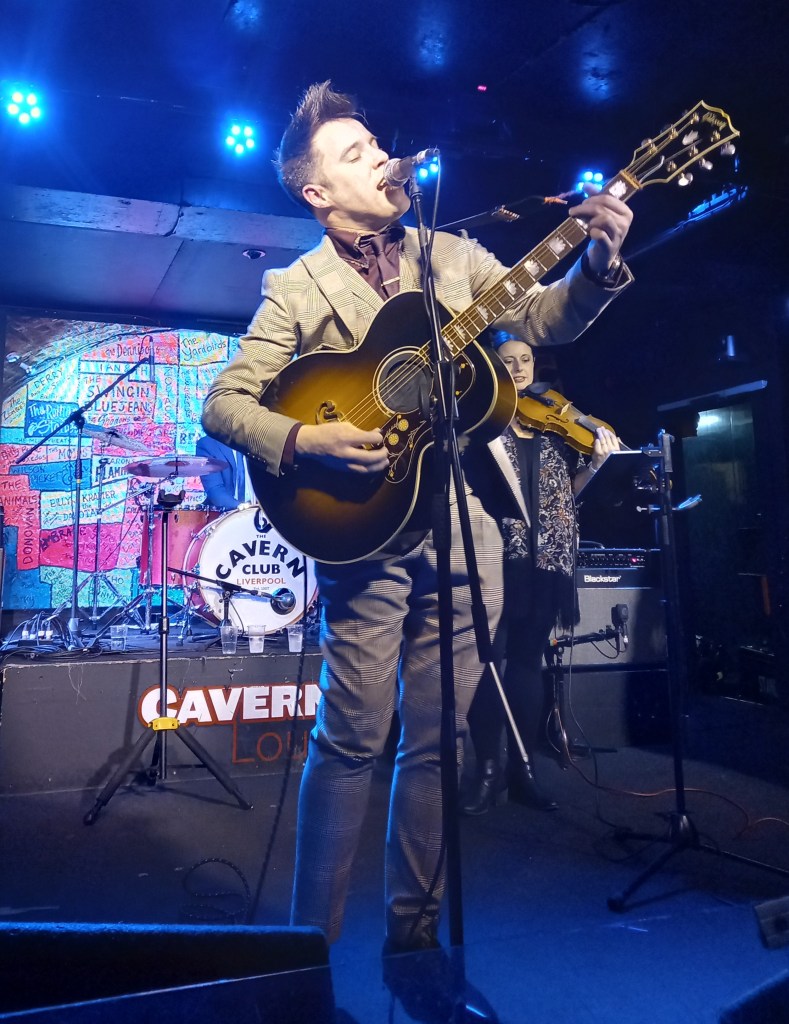
In essence Astley is a folk musician. Acoustic guitar and harmonica are his tools; protest, injustice, disillusionment, and hope are his subject matter. His set started with the opening track from the album – Information Station – a song with echoes of early Bowie. The Battle of Wigan Lane is a song oozing with social realism, ‘Town’s amok with flashing lights, the ambulances split the night, He’s had twelve or thirteen pints and twice as many parking fines’.
The first section of Astley’s performance culminated with Runaway and Suburbia. The former was a song with a strong Waterboys Celtic-Rock feel – brimming with vibrant tambourine and soaring fiddle. That later was a shimmering, slide guitar driven tale of dreams of escape from the mundane. The guitar was excellently provided by Stanleys Jake Dorsman – as if to emphasis the embarrassment of musical riches Wigan currently possess.
The majority of the backing band left the stage, leaving just Astley and his violinist centre stage. This was Astley’s ‘Dylan unplugged’ section. Planet Ninety-Nine, Revolution Postponed and the gentle, solo performed Towns That Changed Our Lives emphasised Astley’s folk-rock foundations.
The encore consisted of Forever, Anthem for the North and fittingly the final track from the album, it’s title track – Twenty First Century Times. Following a touching fiddle solo of Danny Boy, Joe Astley and his band walked off stage to the strains of Vera Lynn‘s We’ll Meet Again. Judging by the success the album has already garnered, I think that closing song was more of a promise than a wish.
Ian Dunphy.
 THE FRONT ROW
Leave a comment